Ready to take your marketing to the next level?
Get a look at:
- How Alrwyt alwash works
- How you can do marketing at scale better, faster and cheap
- How we’re different from agencies, freelancers and in-house marketing team (hint: we’re 15x faster than hiring!)
- The most suitable subscription plan for your needs
Book a call with us
By clicking, you agree to receive communications from Ninja Promo in accordance with our Privacy Policy
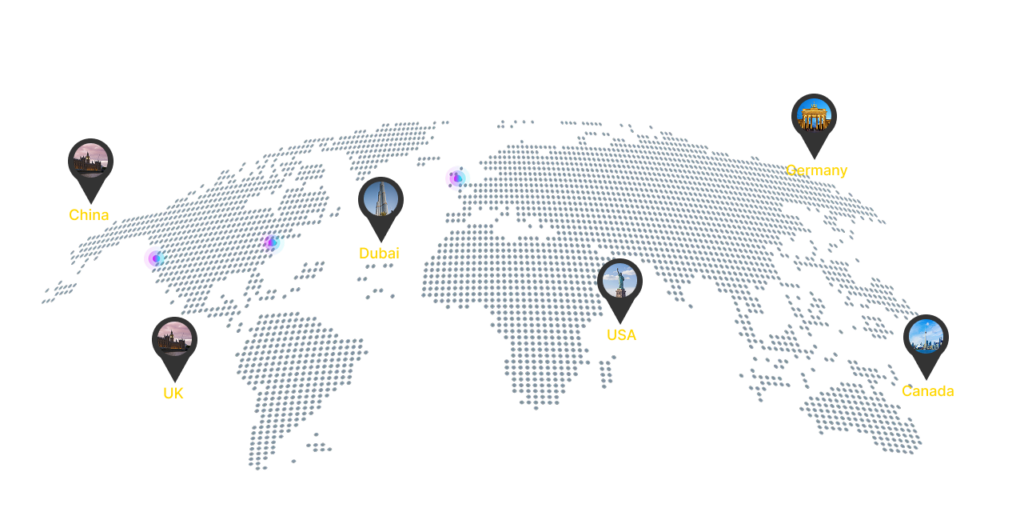
We work all over the world
We have a fully remote team, so we can hire the best experts from all over the world
We Are Here To Help!
You have the vision—we engineer for the future. At Digital Gravity, we embrace the modern technology with creativity to provide AI-powered multilingual support, no-code AI website construction solutions, predictive UX and intelligent UI/UX design. No, Matter is you are looking for AI-powered hosting to autonomous maintenance bots and AI-driven A/B testing, our team of 200+ team have expertise to build scalable digital products that think, adapt, and grow with your audience.
How long does ecommerce SEO take to show results?
Most ecommerce stores see measurable ranking improvements within the first 30 days — that’s our guarantee. Significant organic traffic and revenue growth typically compounds between months 2–6 as we expand your keyword footprint. Unlike paid ads, SEO builds lasting momentum: the rankings you earn keep driving revenue long after the work is done.
What's the difference between ecommerce SEO and regular SEO?
Ecommerce SEO is far more complex. It involves optimizing thousands of product and category pages, managing faceted navigation (filters), eliminating duplicate content from variants, implementing product schema markup, building internal linking at scale, and integrating CRO to turn ranked traffic into actual buyers. A generic SEO agency will miss most of this — we specialize in it.
Which ecommerce platforms do you support?
We work with all major platforms: Shopify, WooCommerce, Magento, BigCommerce, PrestaShop, and custom-built stores. Our strategies are platform-agnostic — we focus on what Google rewards and what converts visitors into paying customers, regardless of your tech stack.
How do you choose which keywords to target for my store?
We start with a deep audit of your store, competitors, and market. We identify high-intent buyer keywords — terms people search when they’re ready to purchase, not just browse. We prioritize keywords by search volume, competition level, and revenue potential, then agree on 3–10 target keywords upfront before any work begins.
Can SEO really compete with paid ads for ecommerce?
Absolutely — and it outperforms paid ads long-term. Paid ads stop the moment you stop paying. SEO compounds: every ranking you earn keeps driving free, high-intent traffic 24/7. Our clients typically see a 5–15x ROI from organic search within 6 months, compared to 2–4x from paid ads. We recommend running both, but SEO is your most valuable long-term asset development.
What is technical SEO and why does it matter for my store?
Technical SEO ensures Google can crawl, index, and understand your store correctly. For ecommerce, this includes fixing crawl errors, improving Core Web Vitals (page speed), resolving duplicate content from product variants, implementing structured data (schema), optimizing your XML sitemap, and ensuring mobile-first performance. Without a solid technical foundation, even great content won’t rank.
Do you optimize product pages or just category pages?
Both — and more. We optimize product pages, category pages, collection pages, blog content, and your homepage. Each page type requires a different strategy. Product pages need buyer-intent copy, schema markup, and trust signals. Category pages need keyword-rich structure and internal linking. Blog content captures top-of-funnel traffic and builds topical authority.Lorem ipsum dolor sit amet, consectetur adipiscing elit. Ut elit tellus, luctus nec ullamcorper mattis, pulvinar dapibus leo.